Eco-Reactive Prototype: Everyone’s a Player, Be an NPC
Eco-Reactive Prototype
A companion prototype to the paper "Everyone’s a Player, Be an NPC: Designing Eco-Reactive Agents for Sustainable Game Worlds" (CEEGS 2026, Warsaw).
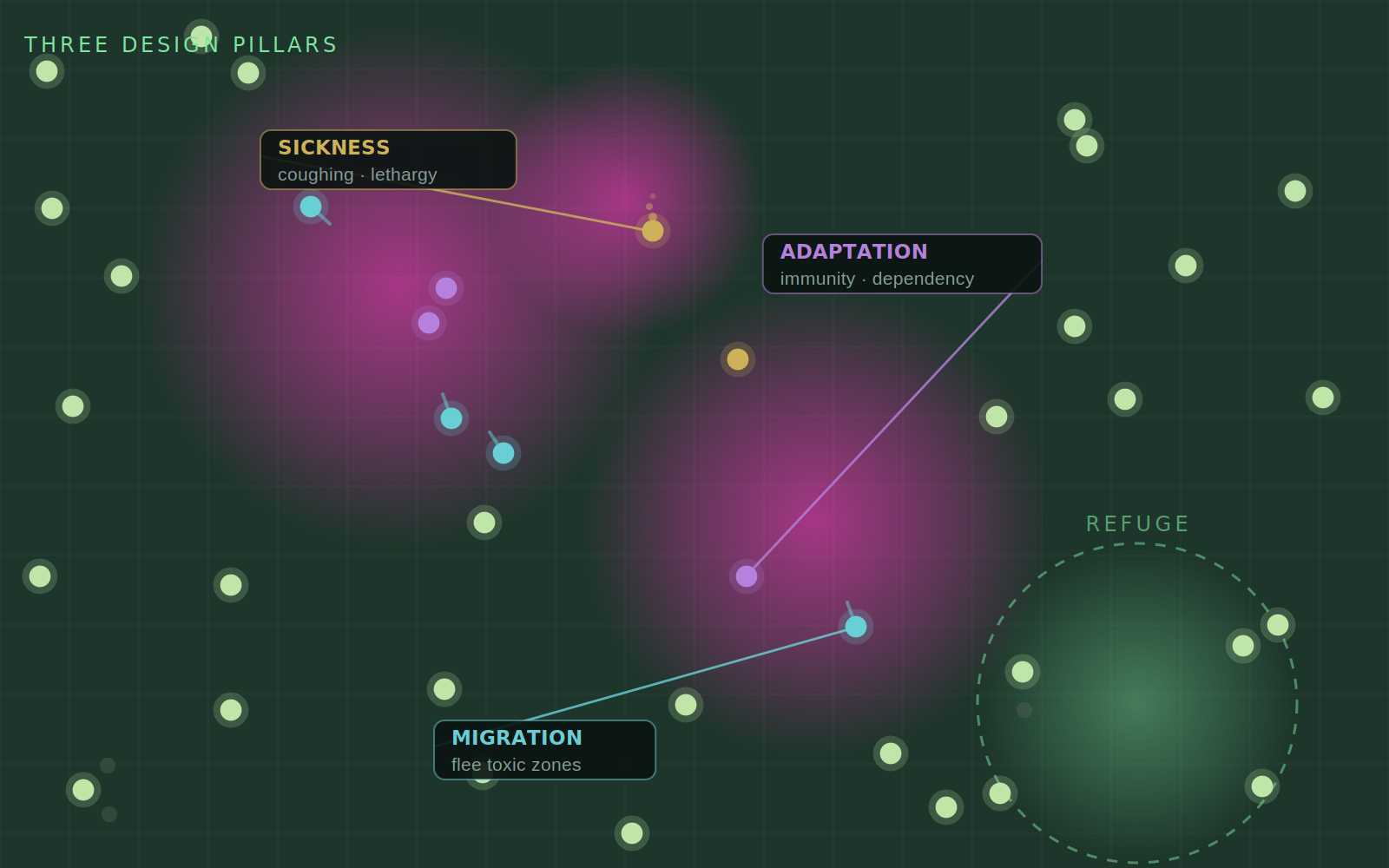
Eco-Reactive Prototype is a web-based simulation that explores NPC behavioural agency tied to environmental health, focusing on sickness, migration, and adaptation. It serves as an interactive argument about power, perspective, and ecological collapse in game worlds.
Concept: Two ways to stand in a dying ecosystem
① God Mode
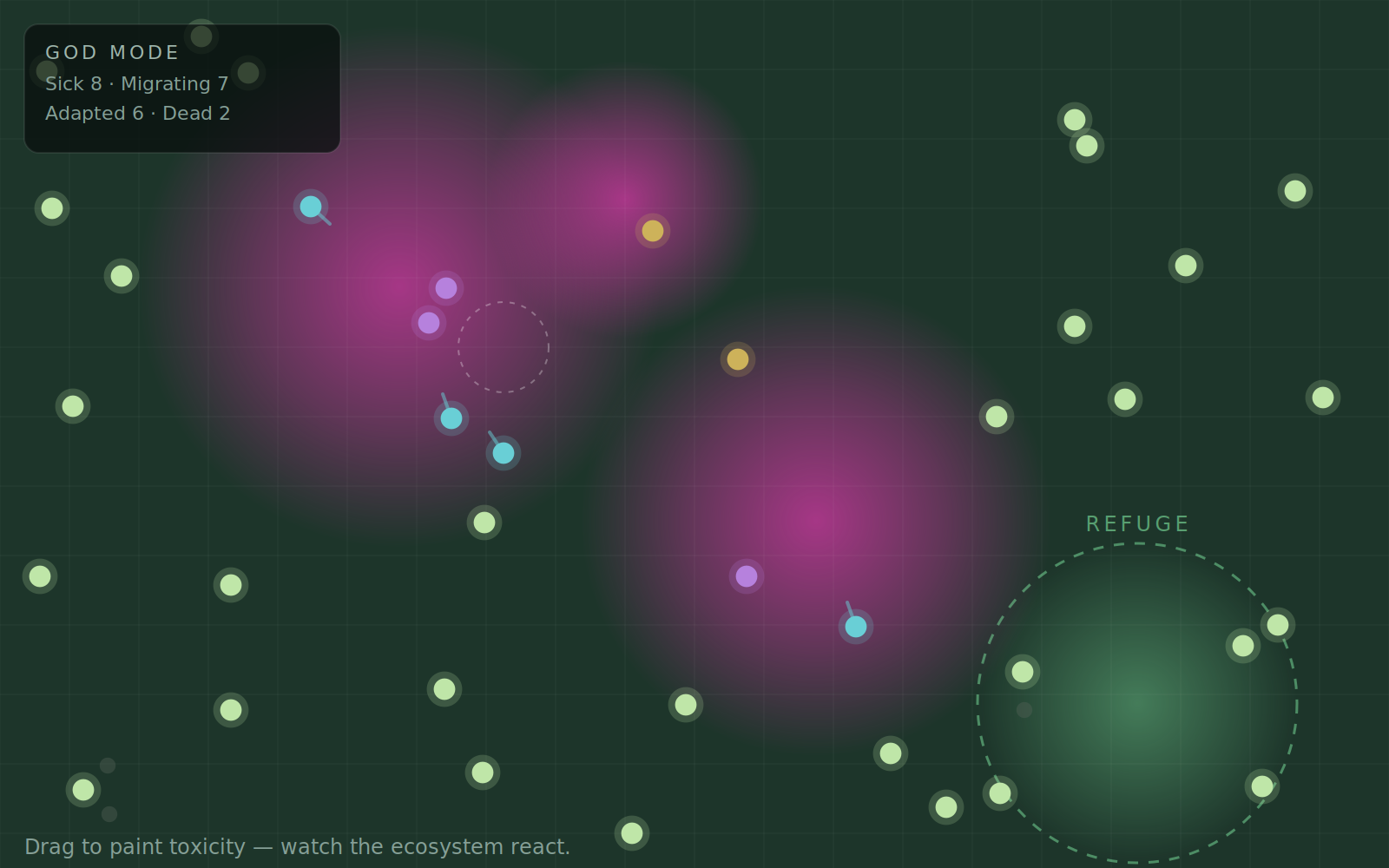
You float above the world. Drag to pour toxicity in, and watch the creatures sicken, flee, and die — from a safe distance. Pollution is just a number you manage, and deaths are just a counter.
② Possession
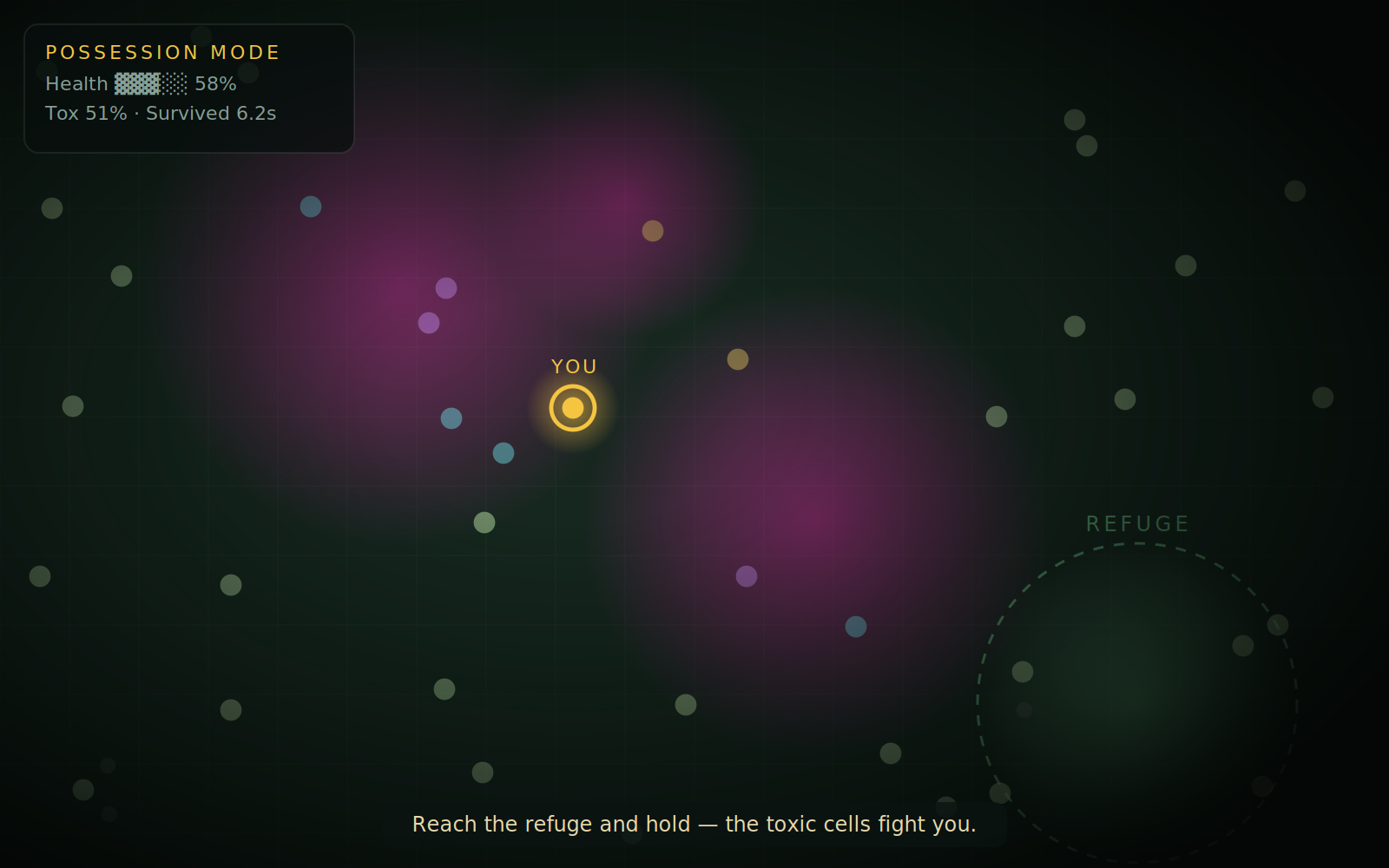
You give up that power and become one of them. Now toxicity isn't abstract — it drags your steps, narrows your sight, drains your life. You must survive what you made.
Features
- Environmental Simulation: Dynamic diffusion of toxicity across the grid.
- Eco-Reactive NPCs: Agents that react to local toxicity levels by migrating, adapting, falling sick, or dying.
- Perspective Shift: Seamlessly switch between a top-down "god" view and an in-grid "possession" mode.
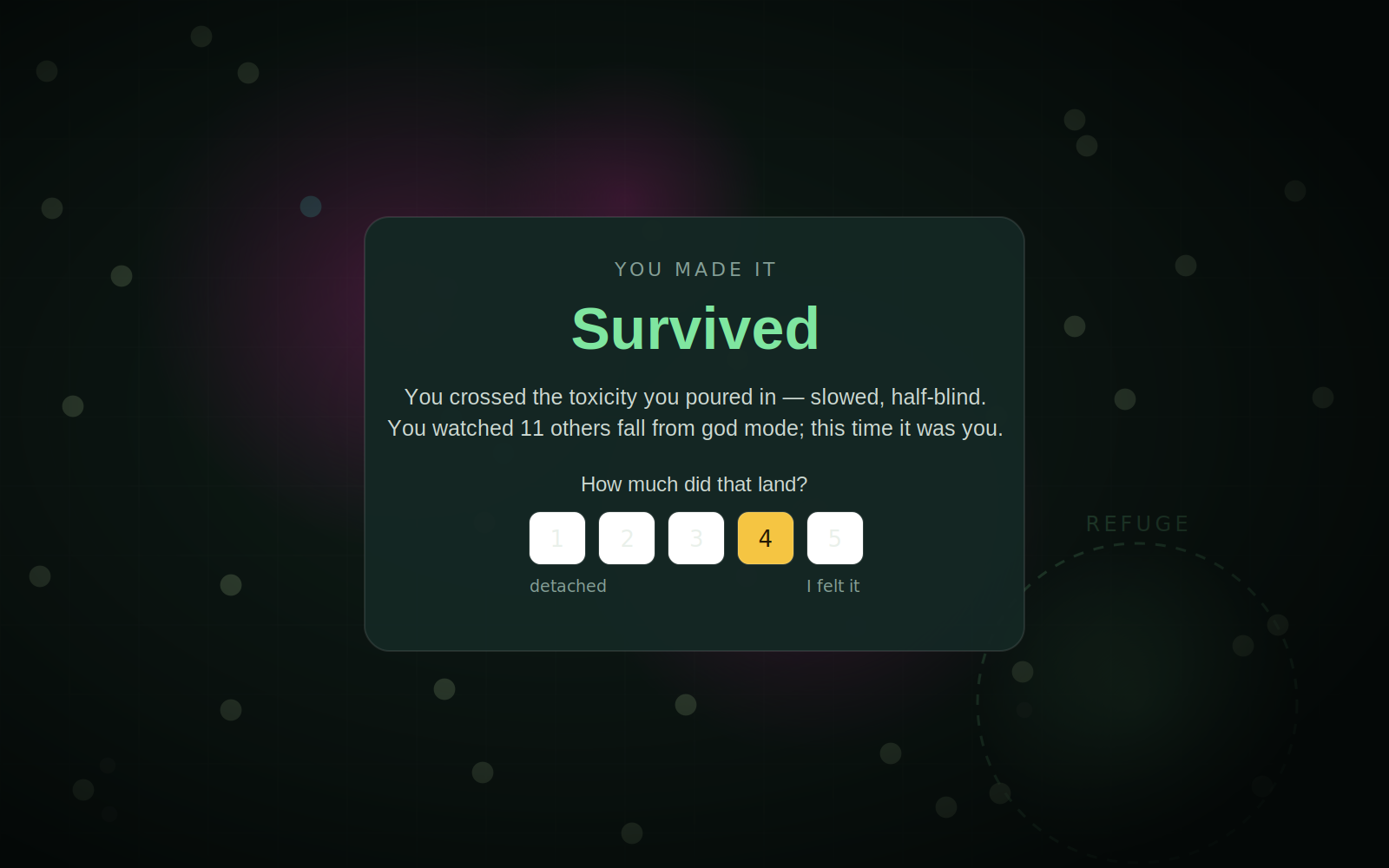
- Empathy Probe: Session logging and a felt-rating system at the end of each possession run.
Controls
God Mode
- Paint Toxicity: Click and drag across the grid.
- Sim Speed: Adjust the speed of the simulation.
- Brush Size: Change the radius of the toxicity brush.
- Actions: Pause/Resume, Cleanse rain, Reset world.
Possession
- Inhabit: Click any agent in the grid (marked with a yellow ring).
- Move:
W,A,S,DorArrow Keys. - Objective: Reach the green Refuge and hold your ground.
- Release: Press
Escto return to God Mode.
How to Run
Simply open eco-reactive-prototype.html in any modern web browser. No server or build process is required.
Credits & License
Concept, design & code: Anastasios Theodoropoulos Dept. of Performing & Digital Arts, University of the Peloponnese · 2026
This project is licensed under the Creative Commons Attribution 4.0 International (CC BY 4.0) license.